Listicles
Decoupling the Data Stack: A Technical Guide to Apache Iceberg Query Engines
By e6data Team
The structural shift from monolithic, proprietary data warehouses toward modular, open data lakehouse architectures is a financial and operational necessity.
Historically, data engineering teams were forced into a binary architectural compromise. On one side, they paid for the high performance and ACID guarantees of a relational warehouse at the cost of vendor lock-in and rigid schema enforcement.
On the other side, they utilized the infinite scalability of cloud object storage but lost transactional integrity.
Apache Iceberg has emerged as the definitive standard to resolve this dichotomy by providing an intelligent metadata abstraction layer over raw Parquet files. Standardizing on an open table format is only the first half of the migration. The strategic differentiation now lies in the compute layer.
Because Iceberg allows multiple independent engines to operate on the same data, the challenge for product leaders is selecting the specific engine that balances query latency, metadata overhead, and operational cost for their specific workload.
Comparison of Leading Iceberg Compute Engines
What to Look for in an Iceberg Query Engine
Evaluating a compute engine for an open table format requires moving beyond standard TPC-DS benchmarks. You must assess how the engine interacts with the Iceberg metadata tree.
Metadata Handling Efficiency: Can the engine handle tables with millions of files without coordinator node OOM (Out of Memory) errors? Prioritize engines with streaming metadata resolution over those that attempt full-tree materialization.
Support for Deletion Vectors: Iceberg v3 introduced deletion vectors to improve Merge-on-Read performance. Ensure the engine can read these to avoid computationally expensive anti-joins.
Catalog Interoperability: The engine must connect via the Apache Iceberg REST Catalog specification to guarantee compatibility with tools like Apache Polaris or Nessie.
Vectorized Execution: For high-concurrency BI, C++ or Rust-based vectorized engines provide superior hardware utilization compared to traditional JVM-based execution models.
Best Iceberg Query Tools for SaaS Explained
e6data: The Architecture for Petabyte-Scale Iceberg
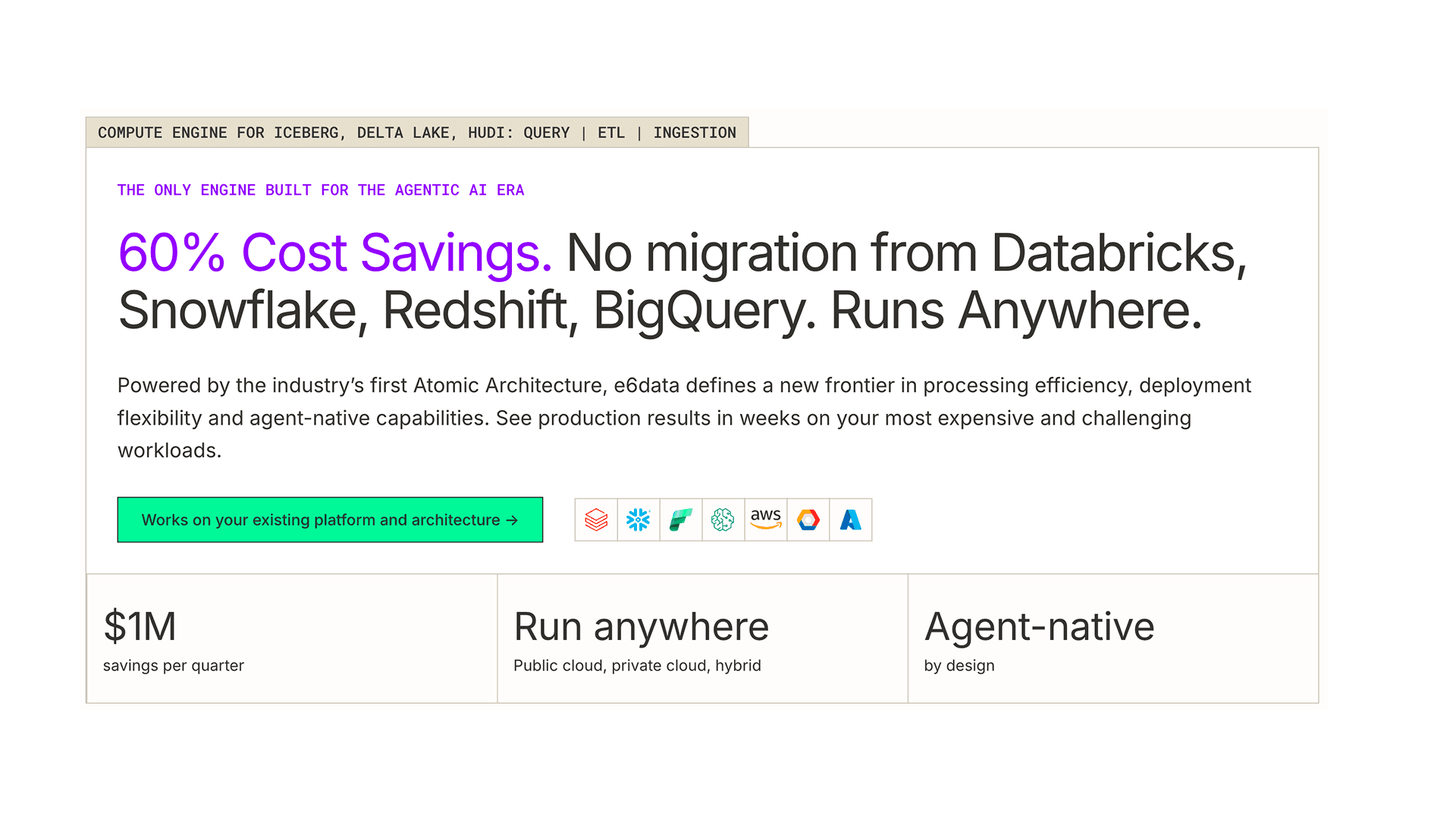
e6data is specifically engineered to eliminate the metadata wall that causes legacy engines to fail. While traditional engines like Trino or Spark frequently crash due to Out-of-Memory (OOM) errors when a table grows to tens of millions of files, e6data utilizes a decentralized, Kubernetes-native architecture.
Streaming Metadata Resolution: Unlike engines that attempt to load an entire 5TB metadata tree into a single coordinator node's RAM, e6data streams manifest files in bounded chunks. This ensures memory usage remains flat regardless of table scale.
Layered Pruning Logic: The engine evaluates queries against partition summaries in the manifest list before downloading a single manifest file. This metadata-first approach ensures worker nodes only touch the specific data blocks required.
Granular Scaling: e6data scales dynamically mid-query in highly granular 1-vCPU increments. This exact resource matching eliminates over-provisioning and yields significant reductions in total compute costs.
e6data stands out for high-concurrency environments because its planner treats Iceberg metadata as a queryable dataset. It applies distributed SQL optimizations to the planning phase itself, preventing the coordinator bottleneck that severely limits other MPP engines.
Apache Spark: The Data Engineering Workhorse
Image credits: Apache Spark
Spark remains the industry standard for distributed data processing and serves as the primary data engineering engine within the Iceberg ecosystem. Its Directed Acyclic Graph (DAG) scheduler provides the fault tolerance necessary for petabyte-scale transformations.
Table Maintenance: Spark is the primary tool used for Iceberg table maintenance. Engineers rely on it to execute critical compaction jobs and snapshot expiration routines, which prevent small file bloat from degrading downstream read performance.
Shuffled Operations: For massive joins that exceed the memory of any single node, Spark’s disk-spilling shuffle mechanics provide a safety net that faster, strictly in-memory engines lack.
Trino: High-Speed Federation
Image credits: Trino
Trino (formerly PrestoSQL) is a massively parallel processing distributed SQL engine engineered to resolve the high latency associated with batch processors like Spark. Its strictly in-memory, pipelined execution means it does not write intermediate results to disk.
Join Federation: Trino can join an Iceberg table on AWS S3 with a PostgreSQL operational database in a single query. This eliminates the need for brittle ETL pipelines when analysts need to combine historical lakehouse data with live application state.
Resource Management: Because Trino relies heavily on RAM to execute complex joins, it is highly susceptible to memory pressure and requires precise cluster sizing to avoid failures during peak concurrency.
StarRocks: The Vectorized C++ Engine
StarRocks is a high-performance analytical database designed for real-time, high-concurrency workloads that demand sub-second latency. Built in C++, it utilizes CPU SIMD instructions to process data in highly compressed columnar formats.
CBO Intelligence: Its Cost-Based Optimizer analyzes Iceberg metadata statistics to dictate the most efficient join ordering. This makes it highly effective for complex snowflake schemas.
Global Dictionaries: It encodes low-cardinality string columns into integers on the fly, drastically accelerating GROUP BY and COUNT DISTINCT operations common in dashboarding.
Apache Flink: Real-Time Ingestion
Image credits: Apache Flink
Flink is the industry standard for stateful, unbounded stream processing. It processes data event-by-event, delivering microsecond latency and guaranteeing exactly-once semantics.
CDC Integration: Flink translates real-time database events into Iceberg positional and equality delete files. This provides near-real-time visibility of operational data in the lakehouse.
Small File Risk: Because Flink continuously writes micro-batches of data, it is the primary culprit behind the Iceberg small files problem. Deploying Flink requires running asynchronous compaction services to prevent the metadata tree from fragmenting.
Dremio: The Arrow-Native Semantic Layer
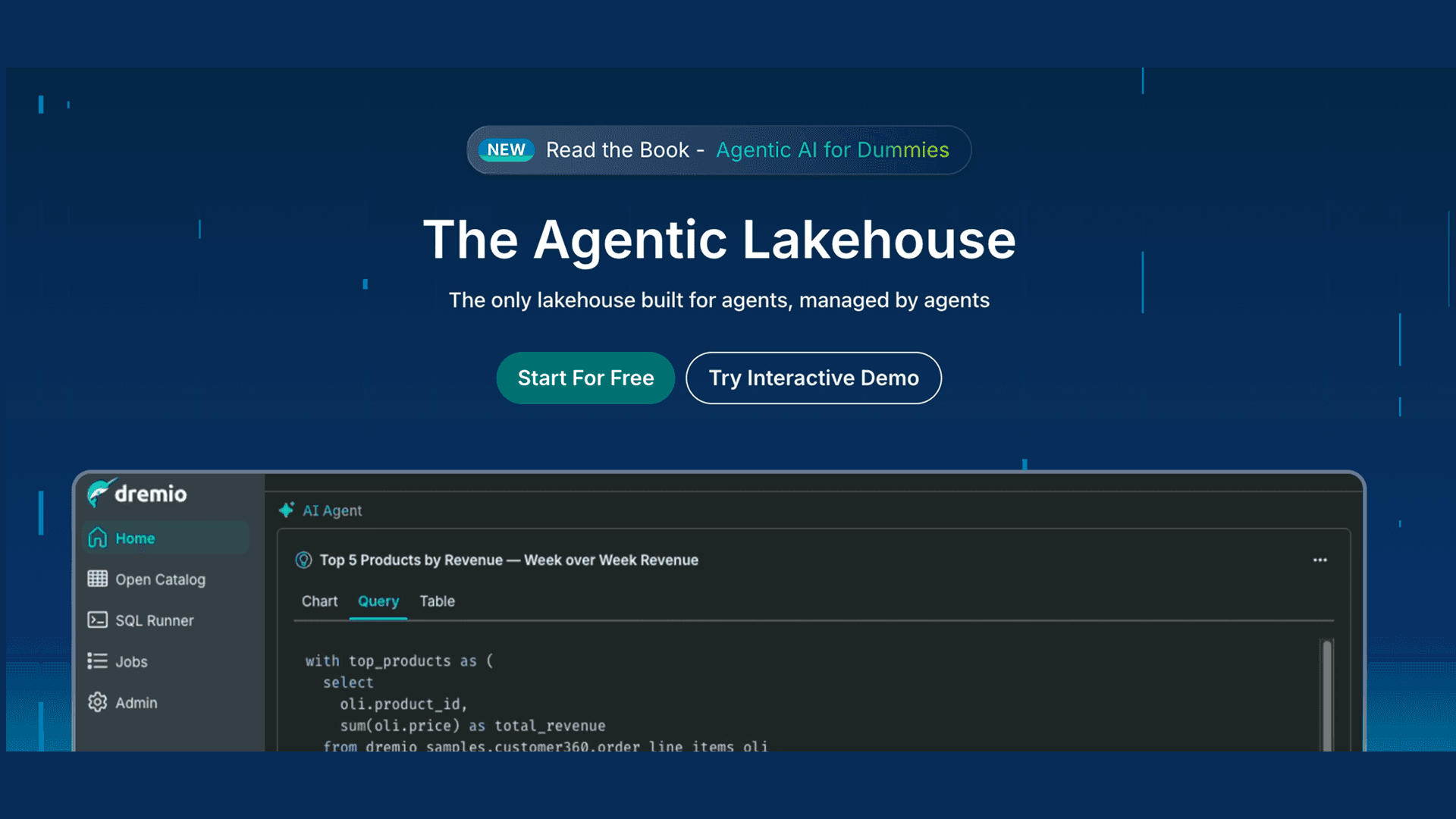
Image credits: Dremio
Dremio is a specialized lakehouse platform built natively around Apache Arrow. By keeping data in Arrow buffers throughout the execution lifecycle, Dremio eliminates the CPU-intensive serialization and deserialization overhead that slows down JVM-based engines.
Autonomous Reflections: Dremio monitors user query patterns and automatically generates physically materialized views stored as hidden Iceberg tables. This accelerates response times without requiring data engineers to manually orchestrate ETL pipelines.
Data Governance: It provides a semantic layer allowing data teams to curate virtual datasets and apply row-level security without duplicating the underlying storage.
ClickHouse: High-Speed Flat Table Scans
Image credits: ClickHouse
ClickHouse is an open-source, distributed columnar database renowned for its extreme speed in processing flat, denormalized tables. It relies on its proprietary MergeTree storage engine.
Log Aggregation: ClickHouse interacts with Apache Iceberg through its IcebergS3 table engine. It is highly suitable for massive log aggregations, observability metrics, and time-series telemetry.
Architectural Trade-offs: The query planner is not optimized for complex multi-table joins. Executing queries against external Iceberg tables generally incurs a performance penalty compared to data housed natively within its MergeTree format.
Snowflake & BigQuery: Managed Cloud Integrations
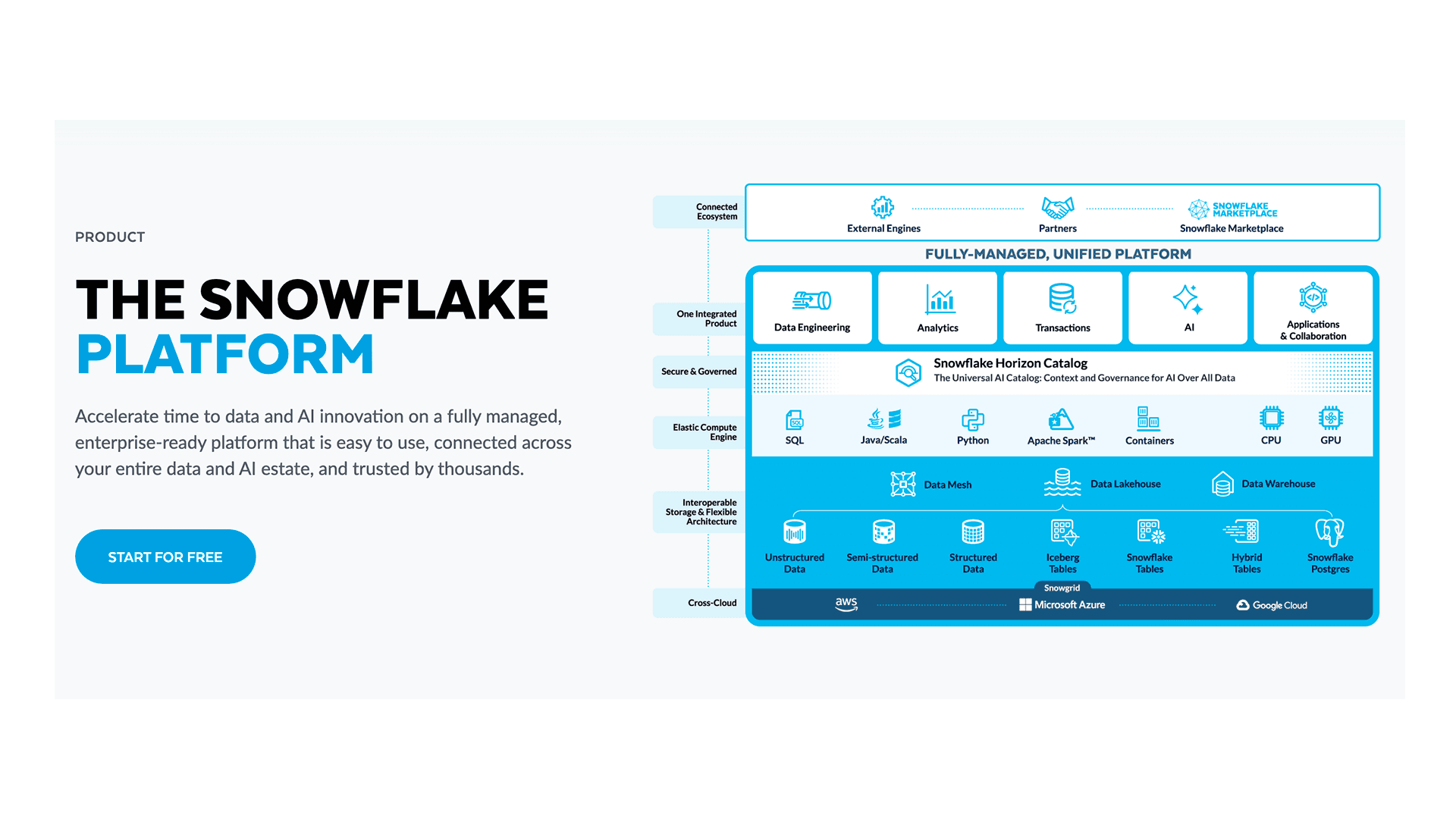
Image credits: Snowflake

Image credits: Google BigQuery
Snowflake and Google BigQuery offer fully managed approaches, categorizing Iceberg integration into distinct models that allow customers to apply advanced governance features to open data formats.
Snowflake Horizon: Snowflake allows customers to retain data ownership in their own cloud object storage while leveraging its highly tuned SQL engine. The Horizon catalog synchronization enables external engines to read Snowflake-curated data.
BigQuery BigLake: BigLake acts as a unified metadata gateway, enabling BigQuery to project its rigorous security mechanisms over Iceberg tables residing in Google Cloud Storage. Querying Iceberg tables via these platforms consumes proprietary compute credits, which increases operational costs for exploratory workloads.
DuckDB: In-Process Analytical Processing
DuckDB is an in-process, serverless analytical SQL engine. It runs natively within the host application’s memory space, executing highly optimized vectorized queries directly from a Python script or within a web browser via WebAssembly (WASM).
Local Prototyping: DuckDB integrates with Iceberg via a community-driven extension. Data scientists can quickly profile or explore massive Iceberg datasets locally without spinning up a cloud compute cluster.
Architectural Limits: It is constrained by its single-node architecture and cannot scale horizontally across multiple machines. Its write capabilities on Iceberg tables remain heavily restricted.
Presto: Exabyte-Scale Federated Querying
Presto is an open-source distributed SQL query engine designed to operate reliably at exabyte scale. It focuses heavily on massive scalability and long-running batch reliability for global technology enterprises.
Prestissimo Workers: A critical advancement in the Presto ecosystem is the migration of execution off the JVM to C++ workers. This reduces memory fragmentation and CPU overhead, resulting in highly stable performance when executing massive, memory-intensive joins.
Batch Reliability: Presto is optimized for massive federated data discovery operations rather than sub-second BI dashboarding.
Apache Doris: Unified MPP Analytics
Apache Doris is an open-source, massively parallel processing database designed to deliver a unified platform for both real-time operational analytics and historical data lake querying.
Hybrid AI Search: Unique among many engines, Doris is aggressively advancing disk-based Approximate Nearest Neighbor (ANN) vector indexing. This can be executed directly against Iceberg tables for retrieval-augmented generation (RAG) and semantic search workloads.
Unified Analytics: Doris actively absorbs Iceberg metadata complexities into its core engine, leveraging advanced zonemap evaluations and persistent metadata caching to accelerate scan planning.
Operational Risks: Small Files and Metadata Bloat
Adopting an open table format introduces operational complexity. Implementing Iceberg without understanding its mechanical limits will inevitably lead to severe performance degradation.
The Small Files Problem: If a streaming pipeline commits data to an Iceberg table every few seconds, it generates hundreds of thousands of microscopic Parquet files. The query planner must then open and evaluate the metadata for every file. A query planning phase that should execute in 200 milliseconds balloons to 45 seconds or triggers an OOM error.
Merge-on-Read (MoR) Delete Bloat: MoR solves write latency by appending a lightweight delete file that masks outdated rows. Over time, an engine must read the base data files, load overlapping delete files into memory, and execute complex anti-joins. This rapidly degrades read performance and spikes memory utilization on worker nodes.
Orchestrating the Modern Lakehouse Compute Layer
The ascension of Apache Iceberg represents the commoditization of the data storage layer. By extracting transactional metadata logic from proprietary execution engines and embedding it directly within the open storage infrastructure, organizations ensure that their data remains universally accessible and immutably governed.
The strategic imperative for data engineering teams is orchestrating an ecosystem of specialized compute engines that interface with a single optimized Iceberg foundation.
Highly resilient, petabyte-scale data transformation mandates the fault-tolerant DAG architecture of Apache Spark. Real-time event ingestion requires the continuous processing guarantees of Apache Flink. For analytical serving, specialized engines like e6data provide a blueprint for bypassing the metadata bottlenecks that paralyze legacy systems.
Organizations must deploy a carefully curated matrix of compute engines optimized for their specific workloads, all operating smoothly atop the open standard of Apache Iceberg.
Compute Engine | Primary Read/Write Modality | Optimal Use Case | Core Technical Advantage |
|---|---|---|---|
e6data | High-Concurrency Batch & Interactive | Sub-second BI on petabyte-scale data | Decentralized 1-vCPU scaling; streaming metadata reads |
Apache Spark | Batch & Structured Streaming | Petabyte-scale ETL and ML prep | Native table maintenance; disk-spilling shuffle mechanics |
Trino | Interactive Batch SQL | Federated discovery across sources | Pipelined in-memory execution; mature Iceberg plugin |
StarRocks | Real-Time MPP | Multi-table joins for user-facing apps | C++ vectorized execution; global dictionary encoding |
Apache Flink | Continuous Unbounded Streaming | Real-time CDC and event ingestion | Exactly-once semantics; event-by-event processing |
Dremio | Interactive Batch SQL | Self-service BI semantic layers | Arrow-native buffers; autonomous Iceberg reflections |
ClickHouse | Real-Time OLAP Batch Reads | Log aggregations and telemetry | High-speed flat table scans; MergeTree optimization |
Snowflake | Managed Batch SQL | Enterprise governance on open data | Zero-maintenance infrastructure; Horizon catalog integration |
Google BigQuery | Serverless Batch SQL | Serverless data warehousing | BigLake Metastore federation; dynamic data masking |
DuckDB | Local Batch SQL | Data science prototyping & WASM | In-process execution; zero infrastructure overhead |
Presto | Exabyte-Scale Batch SQL | Massive federated data discovery | Prestissimo C++ workers; stable long-running batch execution |
Apache Doris | Unified Real-Time Analytics | Hybrid AI vector search & lakehouse | Disk-based Approximate Nearest Neighbor (ANN) indexing |